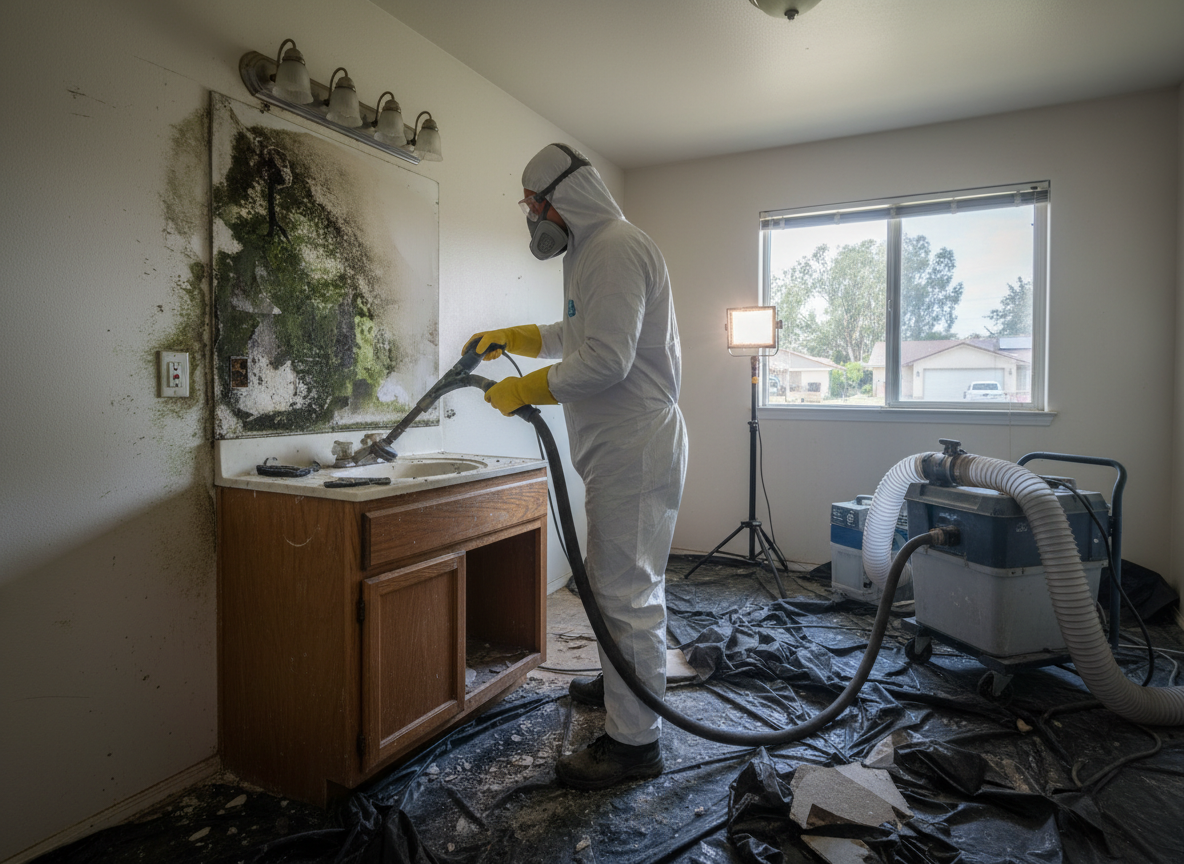
Mentone sits in San Bernardino County with a mild Mediterranean climate that brings hot dry summers and cool winters. Homes near Zanja Creek often see moisture intrusion when winter temperatures drop and creek levels rise, pushing humidity into crawl spaces and basements. Older housing stock along Mentone Park and nearby streets commonly features unsealed foundations that let spores settle in drywall and insulation. A 24 hour mold removal call here usually starts with checking for hidden growth behind baseboards where creek humidity has lingered for weeks. Technicians must account for the dry summer air that can mask active moisture until the next cool spell reactivates colonies.
In 24 hour mold removal work the first priority is stopping spore spread before it reaches HVAC systems common in Redlands and Yucaipa border homes. Containment uses plastic sheeting and negative air machines to isolate rooms while HEPA vacuums pull particles from textured ceilings typical in Calimesa tract houses. Edge cases include mold that has traveled through shared walls in duplexes near the creek or into attic insulation after roof leaks from rare winter storms. Removing affected drywall requires cutting at least 18 inches beyond visible growth to reach dry substrate, then treating wood framing with antimicrobial solutions that penetrate without leaving residue that could affect future painting.
After physical removal, drying focuses on the unique soil conditions around Zanja Creek where clay holds water longer than surrounding sandy areas. Dehumidifiers run for 48 to 72 hours while moisture meters track levels in subfloors that sit close to grade in many Mentone properties. Homeowners are warned that simply running fans without extraction fans can push spores into living spaces. Final clearance testing checks air samples from multiple rooms to confirm levels match outdoor baselines before any reconstruction begins.
Technician insight
In Mentone, the thing that catches most people out with 24 hour mold removal is moisture that travels under slab foundations from Zanja Creek during cool winters, then hides in the subfloor until summer heat drives it upward into finished floors.
Creek-adjacent Home After Winter Rains
Problem: Musty odor appeared in a Mentone house near Zanja Creek following cool season rains. We found: Active mold colonies in crawl space insulation and along base plates where creek humidity had wicked upward. What we did: Established containment, removed wet materials, and ran drying equipment for three days. Outcome: Air tests cleared the home and the owner avoided further spread into living areas.
How it works
- 1
Initial Assessment
Arrive within hours, inspect all affected rooms, and identify moisture sources tied to local creek or winter conditions.
- 2
Containment Setup
Seal off work zones with plastic barriers and negative air pressure to prevent spores from reaching unaffected areas of the home.
- 3
Removal And Cleaning
Cut out damaged materials, HEPA vacuum surfaces, and apply antimicrobial treatments to framing and concrete.
- 4
Drying And Verification
Run commercial dehumidifiers and air movers, then test moisture levels and air quality before releasing the space.
Pricing
Pricing varies by square footage affected, depth of hidden growth, and drying time required after creek-related moisture events.