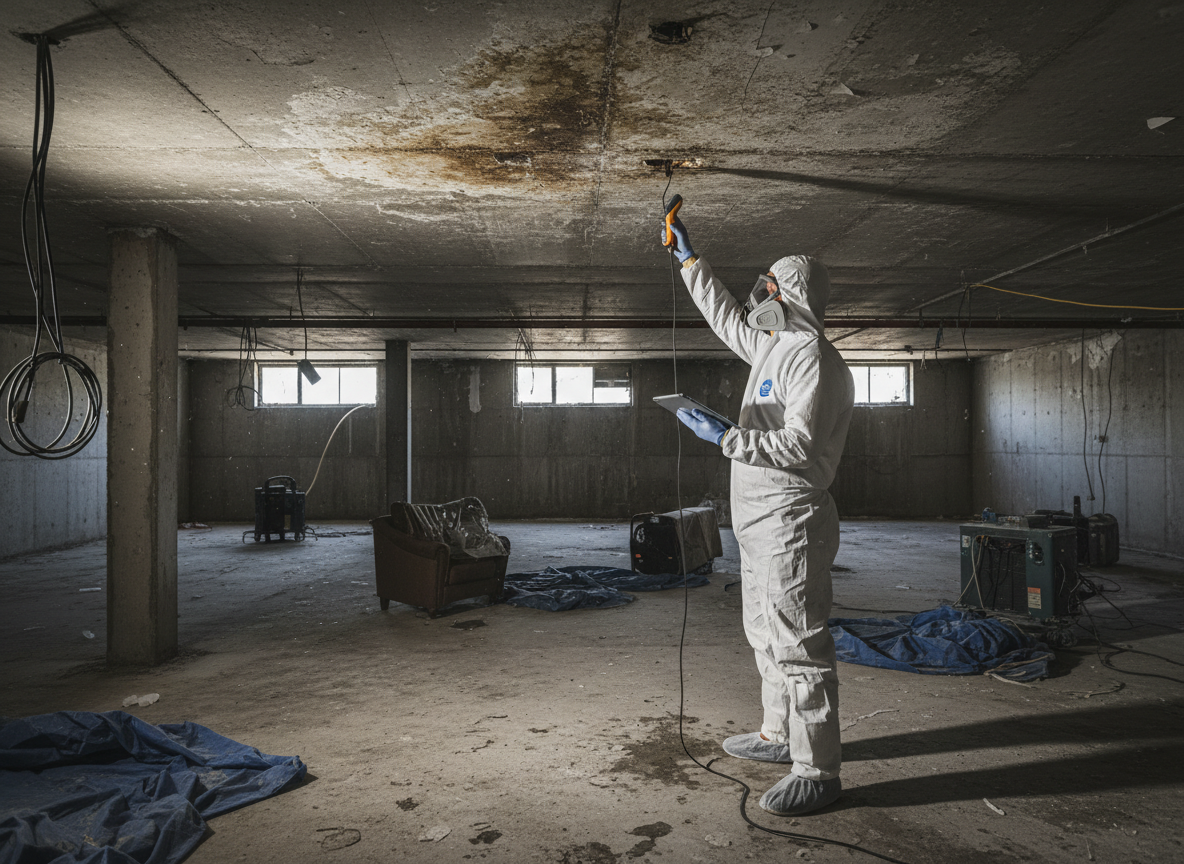
Mentone commercial buildings often sit close to Zanja Creek or Mentone Park, where cool winter moisture can linger in crawl spaces and wall cavities even during the hot dry summers typical of San Bernardino County. Older retail and light-industrial structures common here frequently feature flat roofs and stucco that trap condensation when temperatures drop at night. A commercial mold inspection must map HVAC returns, check slab edges, and test for hidden growth behind tenant improvements that standard residential checks miss.
Redlands and Yucaipa commuters bring different occupancy patterns into Mentone commercial spaces, raising humidity loads from constant foot traffic and equipment. Inspectors walk every lease space, lift ceiling tiles, and use moisture meters on load-bearing walls that older county codes never required to be sealed. Edge cases include former agricultural buildings converted to offices where soil vapor from nearby Calimesa fields can migrate upward during winter rains.
San Bernardino County health rules require documented moisture source correction before any remediation permit issues, so the inspection report must list exact locations and material types rather than general statements. Technicians note when drywall was installed over older plaster, because that layered assembly changes both sampling technique and the scope of follow-up work. The result is a clear map that property managers can hand directly to contractors without guesswork.
Technician insight
In Mentone, the thing that catches most people out with Commercial mold inspection is how Zanja Creek drainage keeps soil moisture high through cool winters even when the rest of San Bernardino County feels dry. Older commercial slabs near Mentone Park often show elevated readings six inches up the wall that owners miss because they only check during summer.
Converted Warehouse Near Mentone Park
A light-industrial building off Mentone Blvd showed tenant complaints of musty air after winter rains. Inspection located condensation under the original slab where creek-adjacent soil stayed damp. Targeted sampling confirmed mold behind base plates; the report gave the owner exact wall sections to open before any remediation permit was filed.
How it works
- 1
Site Walk And Moisture Mapping
Technicians tour every commercial space, logging visible water stains, HVAC condensate lines, and roof penetrations while noting proximity to Zanja Creek drainage.
- 2
Targeted Air And Surface Sampling
Air samples are collected from occupied zones and return plenums; surface swabs focus on porous materials behind fixtures where Mentone winter humidity often concentrates.
- 3
Report With Source Identification
Findings are tied to specific building features such as flat-roof edges or slab-on-grade sections, giving owners actionable locations instead of vague square-foot estimates.
- 4
Recommendations For Follow-Up
The report lists required corrections before any remediation can begin, aligned with San Bernardino County permit expectations.
Pricing
Cost depends on square footage, number of tenant spaces, and whether roof or slab access is required.