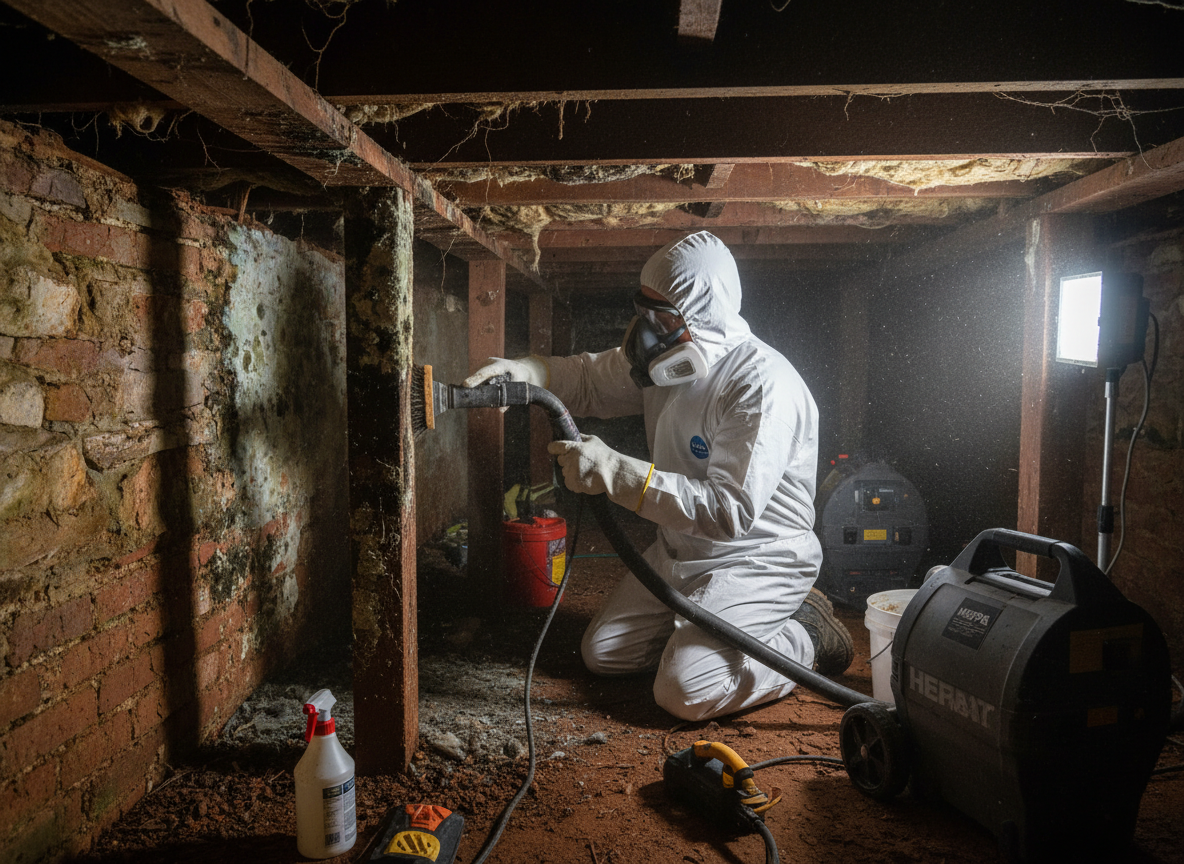
Mentone homes built near Zanja Creek often have crawl spaces that trap moisture from seasonal runoff and cool winter air even when summers stay hot and dry. Older floor joists and subfloors absorb humidity that travels from the creek bed into the soil, creating conditions where mold colonies form on untreated wood and insulation. A Mold Remediation Service Mentone crew begins by mapping airflow patterns and checking for standing water that collects after winter rains before any material is touched.
Removal work requires sealing off the crawl space from living areas with heavy plastic sheeting and negative air machines to keep spores from drifting into bedrooms above. Technicians remove saturated insulation, treat exposed framing with EPA-registered antimicrobials, and install vapor barriers rated for high-moisture soil typical along the creek corridor. In homes close to Mentone Park, crews also inspect for rodent activity that punctures barriers and allows additional damp air entry.
Final steps include restoring proper ventilation with new screened vents positioned to catch prevailing winds and confirming that sump pumps or French drains installed by previous owners are still functioning. Homeowners in nearby Redlands, Yucaipa, and Calimesa face similar creek-influenced conditions, so the same protocols apply when jobs cross into those areas. All debris leaves the site in sealed bags and the space receives a final HEPA vacuum pass before clearance testing.
Technician insight
In Mentone, the thing that catches most people out with crawl space mold removal is how Zanja Creek keeps the soil damp year-round even when the rest of San Bernardino County feels bone-dry; older homes without vapor barriers let that moisture sit under the floor until winter humidity pushes it into the joists.
Hidden Growth Along the Creek
A Mentone homeowner noticed a musty odor after cool winter nights. Inspection revealed black mold on floor joists where water from Zanja Creek had wicked into the soil and evaporated slowly under the house. Crews removed the insulation, treated the framing, and added a sealed vapor barrier plus extra vents. The space dried completely and the odor disappeared within a week.
How it works
- 1
Initial Assessment
Technicians enter the crawl space from 1930 Mentone Blvd to document moisture levels, wood moisture content, and visible growth while noting proximity to Zanja Creek.
- 2
Containment Setup
Plastic barriers and negative air machines isolate the work zone from the rest of the Mentone home to prevent spore migration during removal.
- 3
Material Removal and Treatment
Saturated insulation and affected wood are cut out, surfaces are cleaned and treated, and a new vapor barrier is laid over the soil.
- 4
Ventilation and Drying
Additional vents are added or existing ones cleared, then dehumidifiers run until wood moisture readings drop below 12 percent.
- 5
Clearance and Monitoring
Air samples confirm spore levels match outdoor baselines before the space is returned to normal use.
Pricing
Cost depends on square footage, depth of mold into joists, and access difficulty created by low clearance or creek-adjacent grading; request an on-site assessment for a written scope.