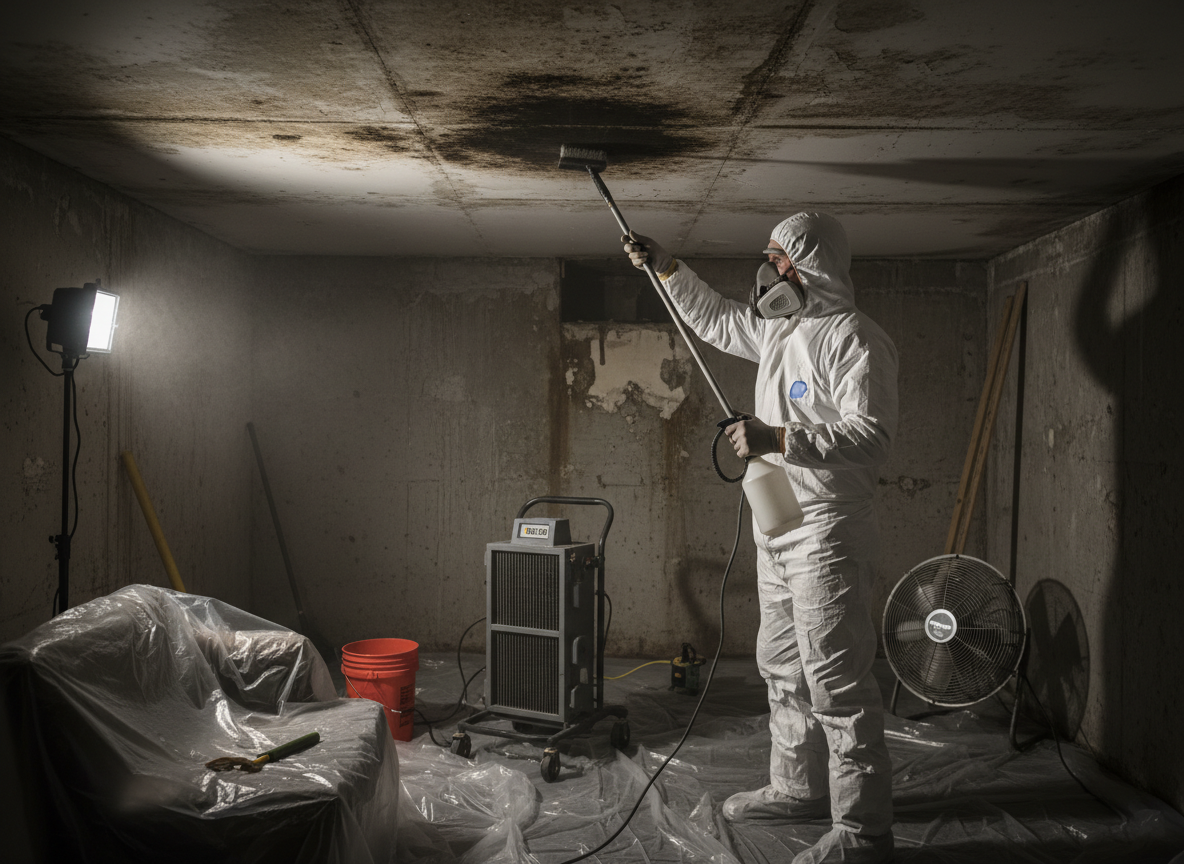
Mold abatement in Mentone requires addressing both visible growth and hidden moisture sources common in San Bernardino County homes. Older housing stock near Zanja Creek often experiences water intrusion during cool winter rains, allowing mold to develop behind drywall and under flooring. Hot dry summers can mask the problem until humidity spikes again, making thorough inspection essential before any removal work begins. Technicians must map moisture levels across the property to prevent regrowth in crawl spaces and attics typical of the area.
Proper containment is critical when performing mold abatement in neighborhoods around Mentone Park. Negative air machines and sealed barriers keep spores from spreading into unaffected rooms, especially important in compact single-story homes common here. Removal includes cutting out affected drywall and insulation, then cleaning hard surfaces with appropriate antimicrobial solutions. Disposal follows local San Bernardino County guidelines to avoid cross-contamination during transport.
After physical removal, drying the structure prevents immediate return of mold. Dehumidifiers and air movers run until moisture readings drop below safe thresholds, a step that takes longer in Mentone's variable climate where morning fog can reintroduce humidity. Final clearance testing confirms the space meets acceptable levels before reconstruction. Homeowners in nearby Redlands, Yucaipa, and Calimesa face similar conditions and benefit from the same methodical approach.
Technician insight
In Mentone, the thing that catches most people out with mold abatement is water from seasonal rains pooling around older foundations near Zanja Creek, especially in homes close to Mentone Park. Homeowners often wipe visible spots and think the problem is solved, but without pulling back drywall to reach the actual damp sheathing the growth returns within weeks.
Creek-adjacent Home After Winter Rains
A Mentone resident reported musty smells in a bedroom following cool season storms. Inspection revealed hidden mold along the exterior wall where Zanja Creek overflow had saturated the soil. We removed the affected drywall and insulation, dried the cavity thoroughly, and treated remaining framing. The space passed clearance testing with no recurrence after the next rain cycle.
How it works
- 1
Inspection and Moisture Mapping
Technicians examine all affected rooms plus adjacent areas, using meters to locate hidden moisture from creek proximity or foundation issues.
- 2
Containment Setup
Plastic barriers and negative air pressure isolate the work zone so spores do not spread through the rest of the Mentone home.
- 3
Removal and Cleaning
Porous materials are removed and disposed of while non-porous surfaces receive antimicrobial treatment and HEPA vacuuming.
- 4
Drying and Verification
Equipment dries the structure, followed by post-remediation testing to confirm mold levels are safe before any rebuilding.
Pricing
Pricing varies based on the size of the affected area, accessibility, and extent of hidden moisture in the structure.