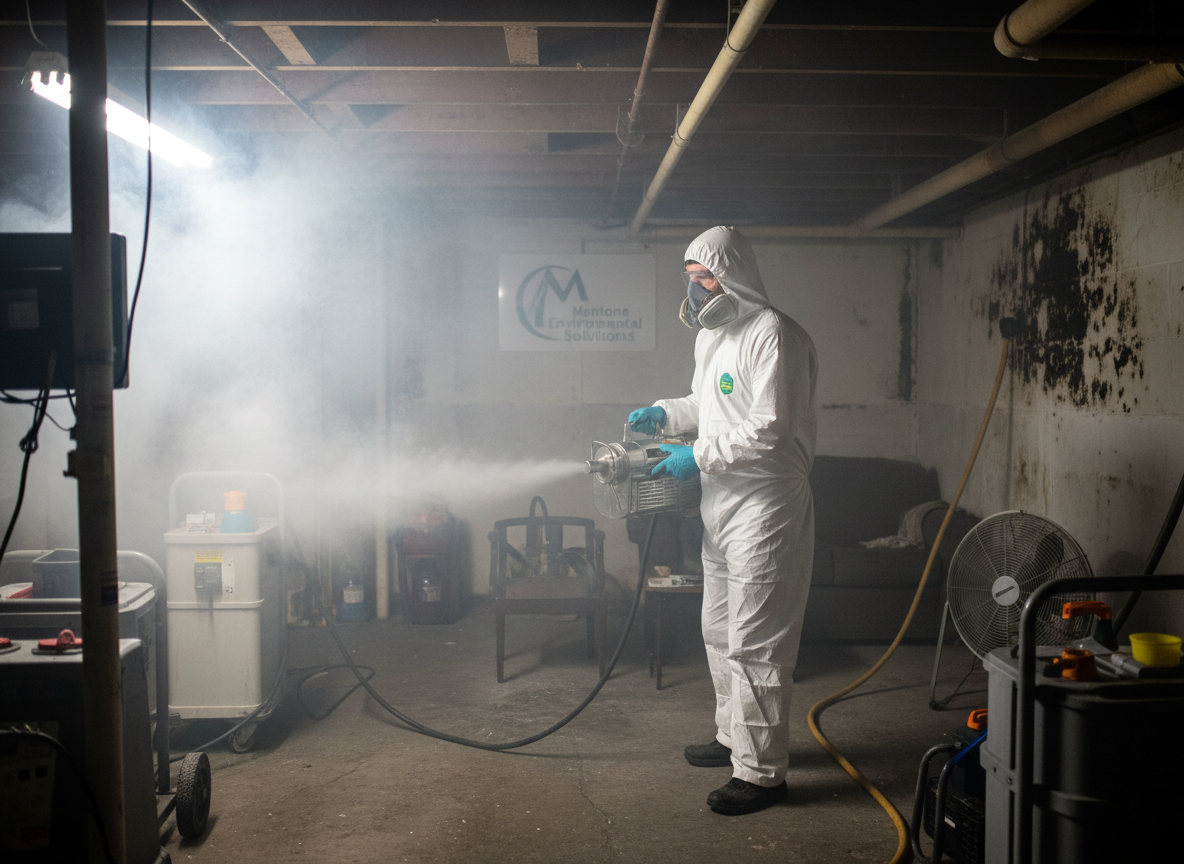
Mold fogging treatment disperses EPA-registered antimicrobials as a fine mist to reach cavities behind drywall and in attics common in Mentone's older single-family homes built near Zanja Creek. The process accounts for cool winter humidity that lingers in crawl spaces while hot dry summers drive rapid spore spread through unsealed vents. Technicians first contain the area with plastic sheeting and negative air machines before fogging to prevent cross-contamination to adjacent rooms or neighboring properties in Redlands and Yucaipa.
Application requires precise dwell time and ventilation afterward because residual moisture from creek-adjacent soil can reactivate spores if not fully addressed. In homes around Mentone Park, technicians often encounter layered insulation that traps spores, demanding multiple passes and post-treatment moisture mapping with infrared cameras. Homeowners must vacate during treatment and allow 24 hours before re-entry to avoid irritation from the fogging agents.
Edge cases include stucco exteriors typical in San Bernardino County that allow hidden water intrusion along window frames during rare winter rains. Fogging alone does not replace source removal when porous materials like carpet padding are saturated, so crews inspect and document conditions before and after. Follow-up visits confirm spore counts have dropped below outdoor baseline levels measured in Calimesa.
Technician insight
In Mentone, the thing that catches most people out with mold fogging treatment is how cool winter air from Zanja Creek keeps soil moisture high under older slab foundations even when the rest of the house feels dry, so the fog reaches the spores but the job fails if we skip extra drying time in the crawl space.
Creek-Adjacent Home Fogging
A Mentone residence near Zanja Creek showed musty odors in the living room after winter rains. Inspection found elevated moisture in the subfloor and spores behind baseboards. We contained the space, applied fogging to wall cavities and attic, then ran drying equipment for two days. Follow-up sampling showed levels returned to outdoor baseline.
How it works
- 1
Initial Containment and Assessment
Seal affected zones with plastic barriers and set up negative air flow while checking moisture levels in walls and floors near known water sources.
- 2
Fogging Application
Apply antimicrobial fog into cavities, attics, and crawl spaces using equipment calibrated for the home's square footage and layout.
- 3
Ventilation and Drying
Run air movers and dehumidifiers to clear residues and reduce humidity before removing containment.
- 4
Verification
Conduct post-treatment inspection and air sampling to confirm reduction in mold activity.
Pricing
Cost depends on square footage treated, number of affected rooms, and whether additional drying equipment is required; request an on-site assessment for an upfront quote.