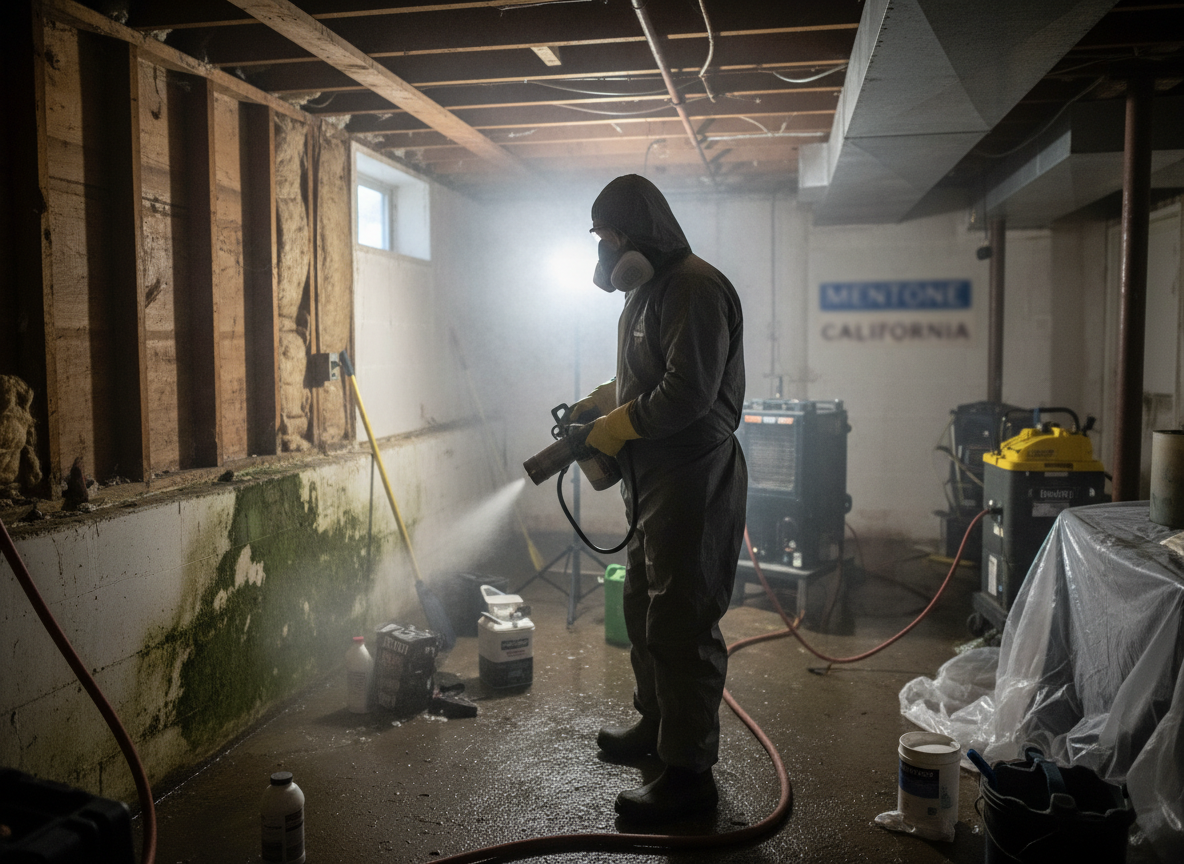
Mentone homes built decades ago often trap moisture from cool winter rains and the nearby Zanja Creek, allowing mold to grow behind drywall and under flooring where it releases persistent musty odors. Hot dry summers then push spores through HVAC systems, spreading the smell into living spaces. Effective odor removal requires locating these hidden colonies without disturbing the dry climate's dust layers that can carry particles further. Technicians use air scrubbers and hydroxyl generators calibrated for the county's Mediterranean patterns rather than generic fogging that fails in older single-story ranch homes common here.
In San Bernardino County, many Mentone properties sit on soil that retains water near Mentone Park, creating edge cases where mold odors linger in crawl spaces even after visible growth is gone. Standard bleach treatments do not address the porous materials like aged plaster and particleboard found in local housing stock. Proper removal involves negative air machines to contain spores, followed by odor-neutralizing agents that penetrate concrete slabs common in the area. Homeowners near Yucaipa and Calimesa frequently discover the issue only after real estate inspections flag elevated readings, making early containment critical to avoid code-related delays during sales.
Seasonal Odor Patterns
Cool winters in Mentone increase indoor humidity from closed windows, allowing mold to produce stronger volatile organic compounds that travel through wall cavities. Technicians check attics and under sinks first because the mild climate keeps many homes without robust ventilation, letting odors build slowly until they become noticeable in summer when systems kick on.
Common Sources in Local Homes
Zanja Creek flooding history affects basements and garages in lower-lying Mentone blocks, where standing water soaks insulation that later dries but leaves odor reservoirs. Removing these requires pulling affected materials rather than surface sprays, especially in homes built before modern vapor barriers became standard.
Technician insight
In Mentone, the thing that catches most people out with odor removal mold is the way Zanja Creek moisture sits under older slab foundations through the dry season then reactivates during winter rains, so surface cleaning never reaches the real source.
Creek-adjacent Home Odor
A Mentone resident noticed a persistent musty smell in the living room after the first cool nights. Inspection found hidden mold under carpet padding near the back wall facing the creek drainage. Crews contained the room, removed the saturated padding and baseboards, treated the concrete, and ran air treatment for two days. The odor was gone and did not return when winter rains arrived.
How it works
- 1
Inspection and Odor Mapping
Technicians walk the property using moisture meters and thermal cameras to trace musty smells back to sources in walls, attics, or crawl spaces typical of Mentone construction.
- 2
Containment Setup
Plastic barriers and negative air machines isolate affected zones to prevent spore spread through HVAC ducts common in San Bernardino County homes.
- 3
Source Removal and Cleaning
Porous materials are removed, surfaces treated with antimicrobial solutions, and air treated with hydroxyl generators to neutralize embedded odors.
- 4
Verification and Clearance
Post-treatment air sampling confirms odor elimination before barriers come down, with follow-up checks during the next cool weather cycle.
Pricing
Costs depend on the size of affected areas, depth of hidden growth in older homes, and whether HVAC cleaning is needed after dry summer conditions spread particles.