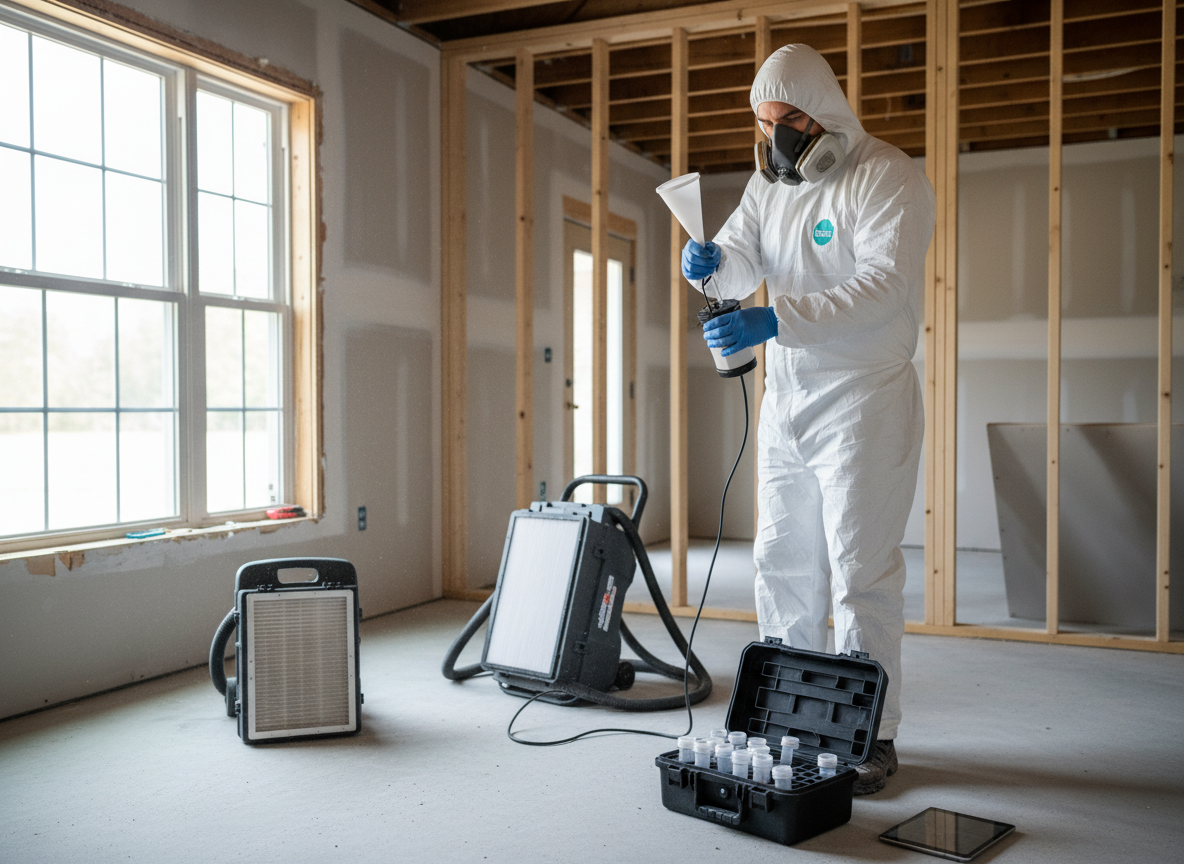
Post remediation mold testing checks whether mold levels have returned to normal background after removal work in Mentone homes. Technicians collect air and surface samples from treated rooms plus unaffected comparison areas, then send them to an accredited lab. In San Bernardino County properties built before 1970, hidden moisture often lingers behind original plaster or in crawl spaces fed by Zanja Creek seepage during cool winter rains. Hot dry summers can mask active growth, so samples must be taken under controlled conditions that replicate actual living use rather than sealed vacant rooms.
Clearance criteria follow industry guidelines that compare treated spaces against outdoor baselines and untreated interior rooms. If spore counts remain elevated, the remediation contractor returns for targeted follow-up before a second round of testing. Homes near Mentone Park and along the creek corridor frequently show repeated issues because seasonal temperature swings drive condensation in poorly ventilated attics. Testing also includes moisture meter readings on framing and drywall to catch any residual dampness that could restart growth once the property is reoccupied.
Owners in Redlands, Yucaipa, and Calimesa often request this service when selling or after insurance claims. Documentation includes chain-of-custody forms, lab reports, and a written statement that levels meet post-remediation standards. Skipping this step leaves residents exposed to recontamination, especially in single-story ranch homes common throughout Mentone where HVAC systems can redistribute spores if ducts were not cleaned during the original project.
Technician insight
In Mentone, the thing that catches most people out with post remediation mold testing is how Zanja Creek moisture keeps seeping into older slab foundations even after visible mold is gone; dry summer air fools homeowners into thinking the job is finished when hidden dampness under the slab will restart growth within weeks.
Creek-adjacent home clearance
A 1960s ranch house near Zanja Creek showed visible mold after winter rains. After removal, air samples still exceeded outdoor baselines because moisture remained under the slab. Additional drying and a second round of testing brought counts to normal levels, allowing safe reoccupancy.
How it works
- 1
Site Assessment
Review prior remediation scope and identify rooms that require sampling based on original moisture intrusion points.
- 2
Sample Collection
Gather air samples from treated and control areas plus surface swabs or tape lifts on suspect materials.
- 3
Lab Analysis
Submit samples to an independent laboratory for spore identification and count comparison against outdoor baselines.
- 4
Report Delivery
Provide written clearance statement with lab results and any recommendations for additional work if needed.
Pricing
Cost depends on number of samples required and square footage of the remediated area.