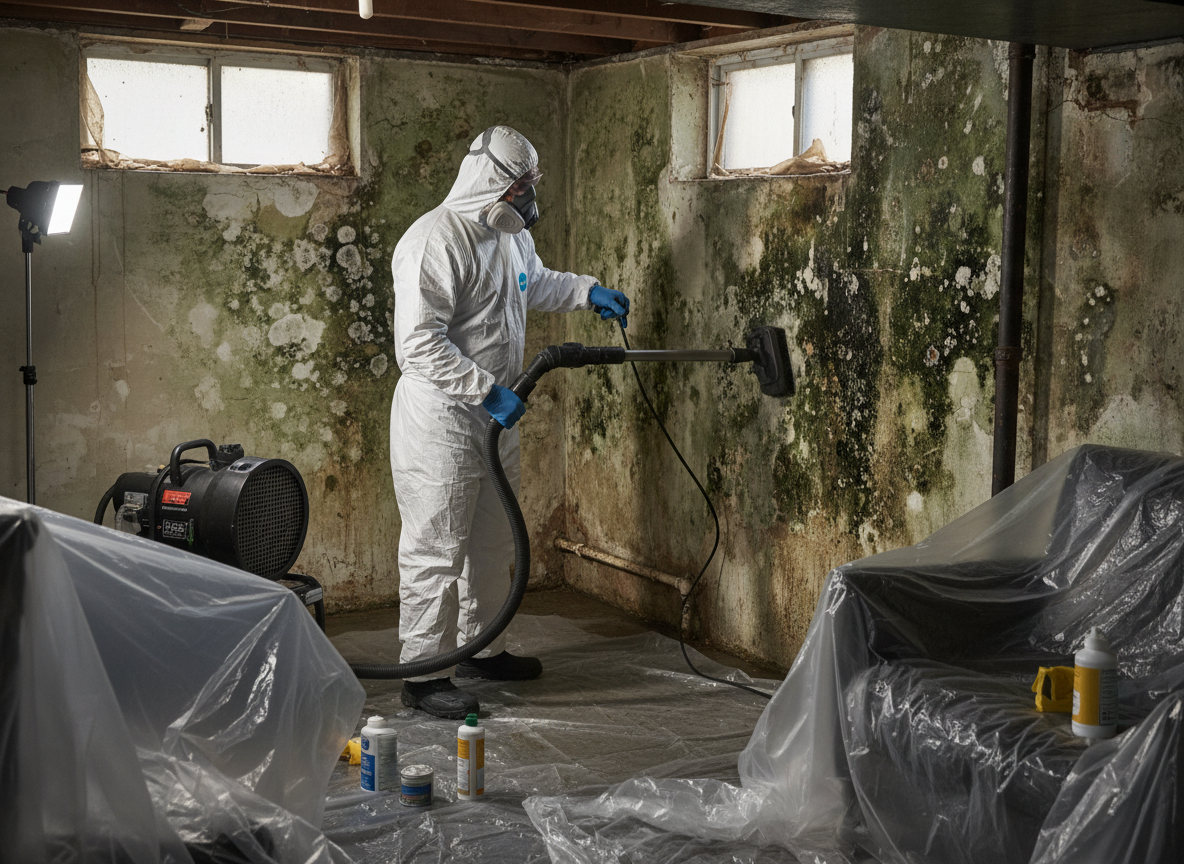
Mentone sits in San Bernardino County with a mild Mediterranean climate that brings hot dry summers and cool winters. Cool season rains and occasional Zanja Creek overflow push moisture into crawl spaces and wall cavities of older single family homes. Professional mold removal starts with locating hidden growth behind drywall or under flooring where residents in nearby Redlands and Yucaipa often miss the source until odors appear.
Homes in Mentone and adjacent Calimesa frequently feature raised foundations and older ductwork that trap condensation during winter temperature swings. When water sits against stucco or wood framing, colonies spread into insulation and subfloors. Removal crews isolate the affected zones, cut out saturated materials, and apply antimicrobial treatments that reach behind remaining surfaces without unnecessary demolition.
Work in this area also accounts for wind driven dust from surrounding hills that can carry spores into open remediation zones. Technicians use negative air machines and sealed containment to prevent cross contamination into unaffected rooms. Final clearance testing confirms that airborne levels have returned to normal before any reconstruction begins.
Property owners along Mentone Boulevard and near Mentone Park regularly deal with recurring issues after heavy winter storms because surface cleaning alone leaves roots in porous materials. Full professional mold removal addresses both visible growth and the moisture conditions that allow it to return.
Technician insight
In Mentone the thing that catches most people out with professional mold removal is how cool winter nights combined with Zanja Creek humidity let moisture linger inside older raised foundation homes long after the rain stops. Homeowners often treat only the visible spot on the ceiling while the real colony sits in the subfloor or behind baseboards near the creek side of the property.
Recurring Odor After Winter Storms
A homeowner in Mentone noticed a musty smell in the hallway after several cool rainy weeks. Inspection found elevated moisture in the subfloor near a Zanja Creek drainage path where water had wicked under the slab edge. Crews removed the affected underlayment, dried the joists, and applied targeted treatment. Air testing cleared the space and the odor did not return the following season.
How it works
- 1
Site Assessment
Technicians inspect all accessible areas including attics, crawl spaces, and areas near Zanja Creek drainage for visible growth and moisture readings.
- 2
Containment Setup
Plastic barriers and negative air machines isolate the work zone to keep spores from moving into living spaces or HVAC systems.
- 3
Material Removal
Saturated drywall, insulation, and other porous materials are cut out and bagged for disposal while non-porous surfaces receive cleaning.
- 4
Drying and Treatment
Dehumidifiers and air movers dry the structure, followed by EPA registered antimicrobials applied to remaining surfaces.
- 5
Clearance Testing
Independent air and surface samples verify that mold levels meet post remediation criteria before barriers come down.
Pricing
Cost depends on the size of affected areas, depth of hidden growth, and whether structural materials must be removed.