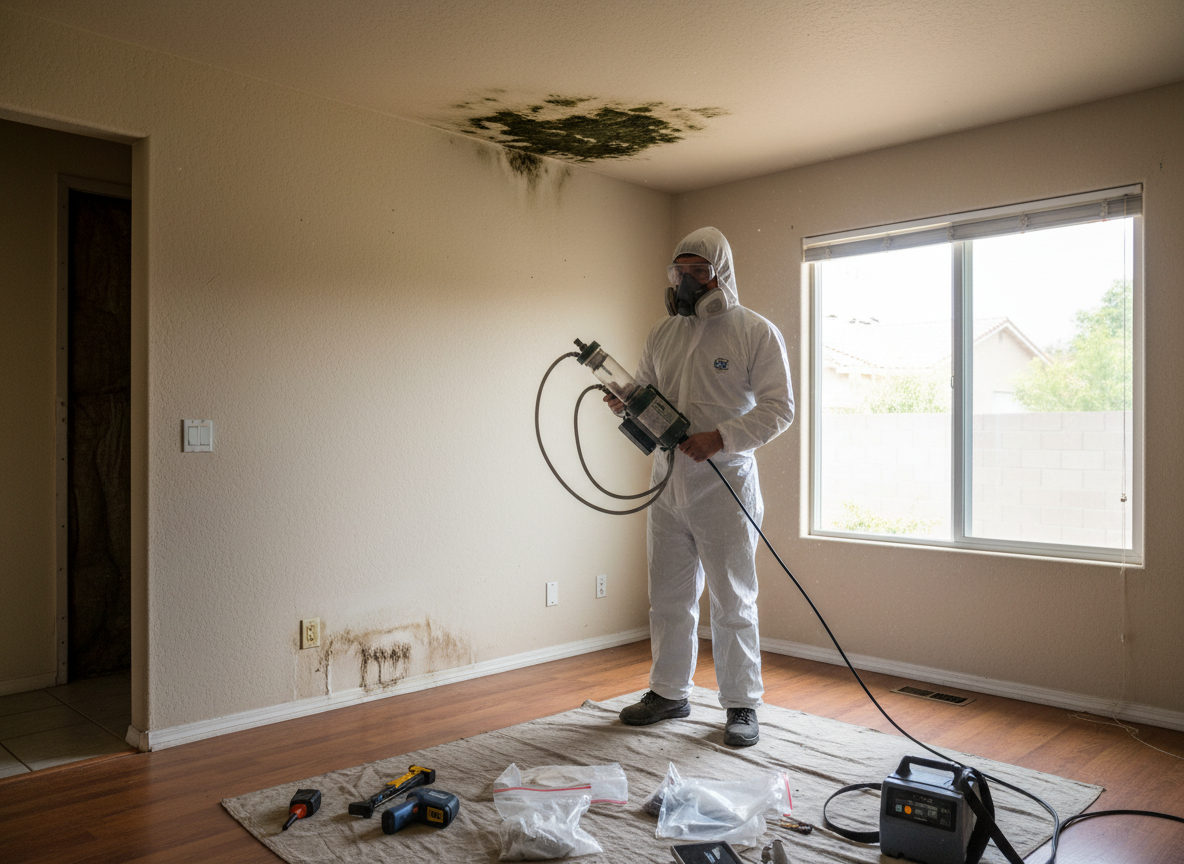
Mentone homes built before the 1980s often feature crawl spaces and slab-on-grade foundations that trap moisture from cool winter rains and occasional Zanja Creek overflow. Residential mold testing here begins with moisture mapping of these hidden zones rather than surface checks alone. Air sampling and tape lifts are taken from HVAC returns and wall cavities where dry summer heat can mask active growth until the next rain event. San Bernardino County building codes require documentation of moisture sources before any remediation plan, so test reports must include relative humidity readings at multiple depths in the structure.
Testing near Mentone Park frequently reveals hidden colonies in attic insulation where poor ventilation meets winter condensation. Technicians use infrared cameras to locate temperature differentials along roof lines and then pull samples from affected batts without disturbing settled dust. Properties in the redlands and yucaipa corridors that draw from the same water table show similar patterns of basement or garage slab seepage after prolonged cool spells. Edge cases include false negatives from recent hot dry winds that lower surface readings while colonies remain active deeper in wall cavities.
Homeowners in Calimesa and Yucaipa often request testing after noticing musty odors following the first winter storms. The process distinguishes between settled outdoor spores common in the San Bernardino County foothills and true indoor amplification. Reports note exact locations, spore types, and moisture meter values so owners can address leaks at Zanja Creek-adjacent properties before growth spreads to shared wall assemblies.
Technician insight
In Mentone, the thing that catches most people out with Residential mold testing is assuming dry summer air means no problem. Older homes near Zanja Creek still hold winter moisture in crawl spaces and under slabs through the hot months, so a single surface swab misses colonies that only show on deeper moisture readings taken after the first cool spell.
Crawl Space Odor After Winter Rains
A 1970s Mentone home near Mentone Park reported a persistent musty smell after January storms. Testing located elevated moisture at the slab edge and active growth in insulation touching the foundation wall. Air and bulk samples confirmed indoor amplification separate from outdoor baselines, allowing targeted removal of affected material without whole-house disruption.
How it works
- 1
Site Assessment
Walk-through of living spaces, crawl space, attic, and HVAC system while noting proximity to Zanja Creek and home age.
- 2
Moisture Mapping
Infrared and pin meter readings taken at foundation, slab edges, and roof penetrations typical in Mentone construction.
- 3
Sample Collection
Air, surface, and bulk samples gathered from high-risk zones without cross-contamination between indoor and outdoor areas.
- 4
Lab Analysis and Report
Results interpreted against regional baselines and delivered with clear moisture source notes for San Bernardino County compliance.
Pricing
Cost depends on square footage, number of samples, and access difficulty in crawl spaces or attics common to Mentone homes.