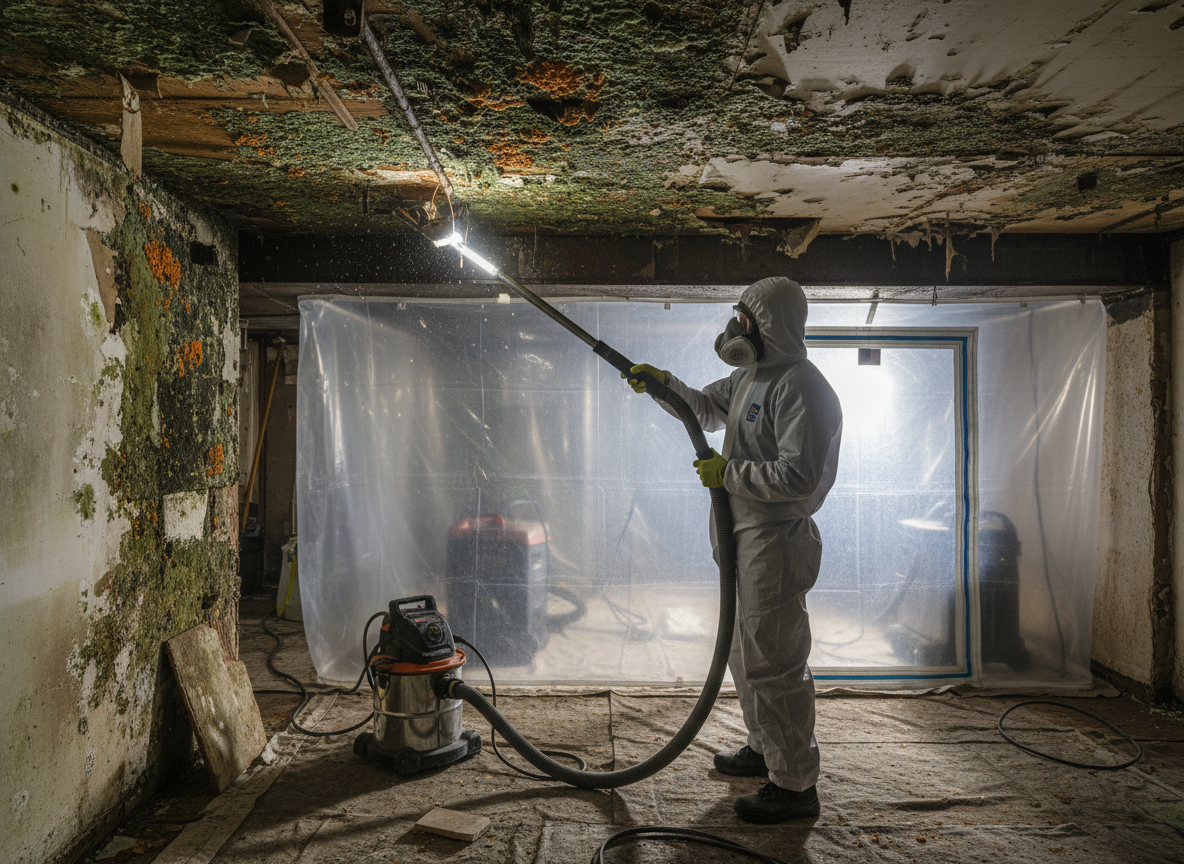
Mentone sits in San Bernardino County where older single-story homes built along Zanja Creek often develop hidden moisture pockets in crawlspaces and behind stucco. Hot dry summers bake surfaces and mask active growth until cool winter rains push humidity through cracked foundations and poorly sealed windows common in the area. Removing toxic mold here requires isolating affected drywall and insulation without disturbing settled spores that can travel into adjacent Redlands and Yucaipa neighborhoods during removal.
Work in these homes frequently uncovers mold behind original plaster walls and under 1970s-era carpet pads that trap condensation from cool nights. Containment barriers must account for the flat terrain that limits natural airflow, forcing techs to run negative air machines longer than in hillier parts of Calimesa. Post-remediation verification focuses on air sampling at multiple points because Mentone's Mediterranean climate allows dormant spores to reactivate quickly once temperatures rise again.
Hidden Moisture Sources
Creek proximity and winter fog often keep soil damp under slabs, feeding mold in slab-edge insulation that standard visual checks miss. Technicians pull baseboards and use moisture meters on every load-bearing wall to locate the real source before any demolition begins.
Technician insight
In Mentone the thing that catches most people out with toxic mold removal is the way Zanja Creek keeps the soil saturated under older slab homes even after the surface looks dry; homeowners often stop at surface cleaning and the mold returns the next cool season because the moisture source under the foundation was never addressed.
Creek-side Crawlspace Growth
A Mentone homeowner noticed musty odors after winter rains. Inspection revealed black mold on joists fed by persistent moisture from Zanja Creek seepage. We contained the space, removed saturated insulation, treated the framing, and installed a vapor barrier. Clearance samples passed and the odor did not return.
How it works
- 1
Initial Containment Setup
Seal off the affected rooms with plastic sheeting and negative air pressure to keep spores from drifting into unaffected areas of the Mentone home.
- 2
Source Identification
Use moisture meters and borescopes to trace water intrusion from Zanja Creek runoff or roof leaks common in local housing stock.
- 3
Removal and Disposal
Cut out contaminated materials, bag them on site, and remove them through exterior doors to avoid cross-contamination.
- 4
Final Clearance Testing
Run air and surface samples after cleaning to confirm spore levels match outdoor baselines before reconstruction.
Pricing
Cost depends on square footage affected, depth of hidden growth, and whether crawlspace or attic access is required.