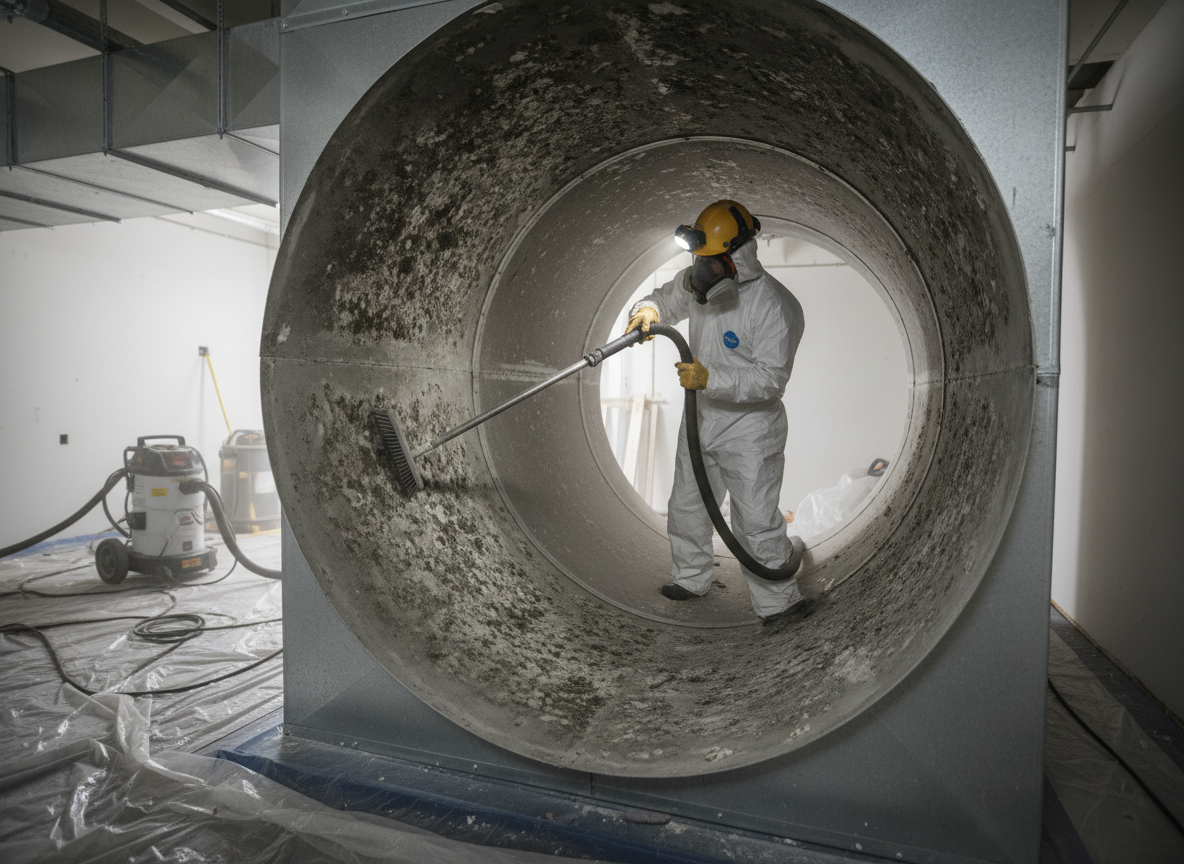
Mentone homes built before the 1980s often feature attic ducts and crawlspace returns that trap condensation when cool winter air from the San Bernardino mountains meets residual dampness near Zanja Creek. Ventilation mold remediation starts with mapping every register and return to locate growth hidden behind insulation or in flex duct runs that standard visual checks miss. Technicians isolate the HVAC system first so spores do not circulate into living spaces during removal, then use HEPA-filtered negative air machines sized for the home's square footage rather than generic shop vacs.
Hot dry summers in San Bernardino County can mask the problem until fall rains raise indoor humidity and trigger musty odors from vents. Remediation includes brushing and vacuuming interior duct surfaces, replacing porous insulation sections that cannot be cleaned, and applying EPA-registered antimicrobials only to non-porous metal components. After treatment, airflow is rebalanced with a manometer to confirm static pressure stays within manufacturer limits, preventing the negative pressure that pulls moist air from crawlspaces back into the system.
Homeowners in neighborhoods around Mentone Park frequently discover the issue only after repeated filter changes or when black residue appears on ceiling registers. Proper remediation also includes sealing duct joints with mastic rather than tape, which fails in the area's temperature swings, and advising on simple changes like running the fan on a schedule during cooler months to reduce stagnation without over-drying the interior.
Technician insight
In Mentone, the thing that catches most people out with ventilation mold remediation is how cool winter nights pull moisture up from the Zanja Creek corridor into uninsulated attic ducts that never fully dry before the next warm day. Homeowners keep changing filters and miss the growth until it reaches the registers.
Hidden Attic Duct Growth Near Zanja Creek
A Mentone homeowner noticed black specks on ceiling vents after the first cool nights of winter. Inspection showed condensation inside flex ducts running through an unvented attic section above older insulation. Crews isolated the system, removed the contaminated flex runs, treated the metal trunk lines, and resealed joints with mastic. Post-clearance testing showed spore levels returned to outdoor baselines and the musty smell disappeared.
How it works
- 1
System Mapping and Containment
Locate all supply and return runs, then seal the HVAC system with plastic sheeting and negative air to prevent spore migration into living areas.
- 2
Source Removal
Brush and HEPA-vacuum interior duct surfaces, remove and dispose of contaminated insulation, and treat non-porous components with approved antimicrobials.
- 3
Restoration and Testing
Reseal joints with mastic, replace filters, rebalance airflow, and perform post-remediation air sampling to confirm clearance before returning the system to service.
Pricing
Cost depends on the number of duct runs, accessibility of attic or crawlspace spaces, and whether insulation replacement is required.