2026-10-17 ·
Inspecting Your Mentone Attic for Mold After Summer Heat Waves
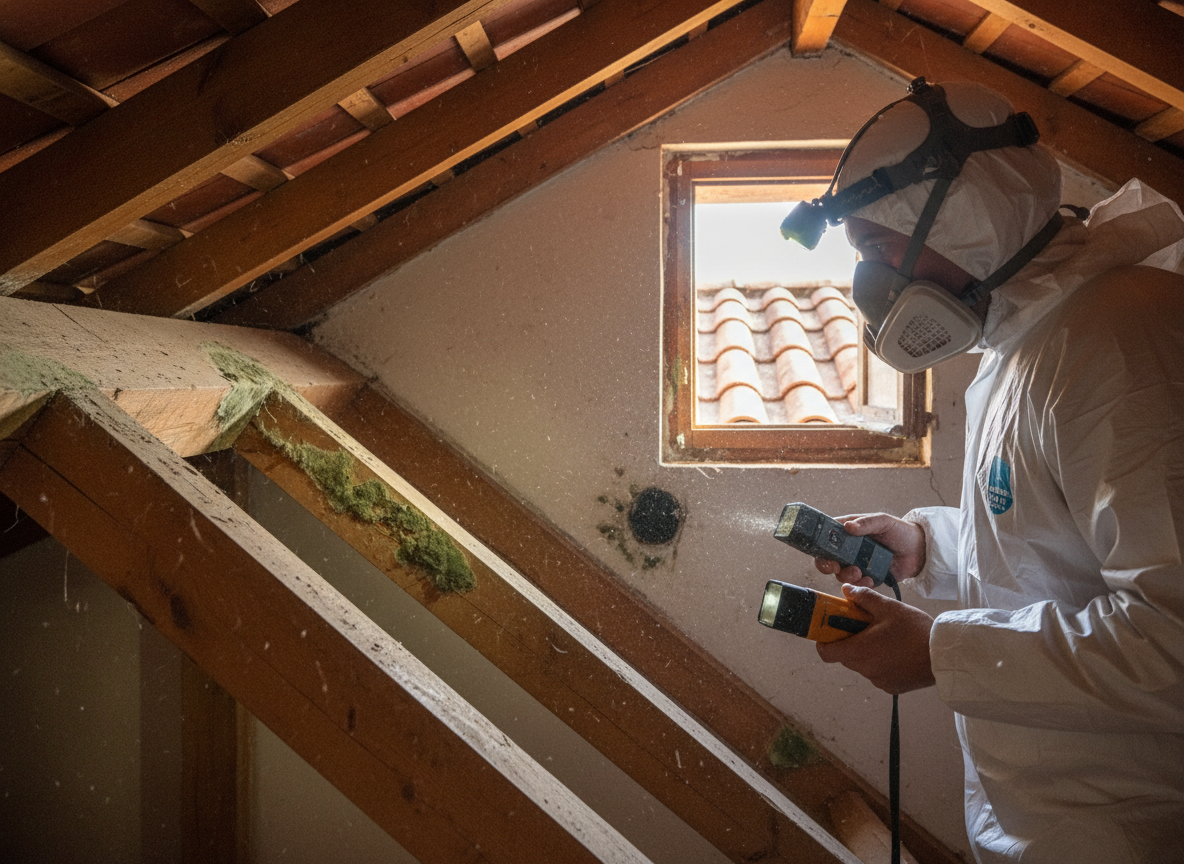
After a Mentone summer heat wave, attic mold often appears within 48 to 72 hours once evening temperatures drop and relative humidity rises inside the roof space. Homeowners should begin inspection at the peak of the first cool spell following the heat, focusing on insulation surfaces, rafters, and HVAC ducts where condensation forms most readily.
Summer Heat Wave Effects on Mentone Attics
Mentone sits in San Bernardino County with a mild Mediterranean climate that brings prolonged stretches above 95 degrees during July and August. These conditions dry out roofing materials during the day, then allow rapid cooling after sunset that creates condensation on the underside of shingles and sheathing. Older single-story homes near Zanja Creek often have minimal ridge venting, so trapped heat lingers and sets up the exact moisture cycle that supports mold colonies on fiberglass batts. The same pattern appears in houses east of Mentone Park where tree cover reduces airflow. Inspectors routinely find black spotting on north-facing rafters in these neighborhoods because that side receives less direct sun and stays cooler overnight.
Visual Inspection Steps After Heat Waves
Start at the access hatch and scan for dark discoloration on wood members or insulation within the first three feet of entry. Use a bright LED headlamp to check the underside of the roof deck for gray or greenish streaks that indicate active growth. Move methodically toward the eaves, paying special attention to areas above bathrooms and kitchens where plumbing vents penetrate the ceiling. In Mentone homes built before 1970, paper-faced insulation often shows staining first because the paper provides food for mold once humidity spikes. Document any spots with dated photos before disturbing material. If discoloration covers more than a few square feet or appears near electrical boxes, stop and contact a professional rather than attempting removal yourself.
Tools and Safety Checks for Local Conditions
Carry a moisture meter calibrated for wood and a non-contact infrared thermometer to compare surface temperatures on rafters versus the roof deck. In Mentone’s dry summer air, readings above 16 percent moisture content on lumber signal a problem even when the attic feels dry. Wear an N95 respirator and eye protection because disturbing spores in a confined space can trigger respiratory irritation. Check that the attic has at least one square foot of ventilation per 150 square feet of attic floor, a common shortfall in homes between Redlands and Yucaipa. Note any blocked soffit vents caused by insulation or debris, which worsens condensation after heat waves.
When to Call for Attic Mold Testing and Removal
If visible growth exceeds ten square feet or moisture readings remain elevated after two days of ventilation, schedule Attic mold testing and removal. Homes near Calimesa with clay tile roofs retain heat longer and often require targeted air sampling to confirm hidden colonies in insulation. The same holds for properties along the east side of Mentone where flash flooding history can leave residual moisture in crawl spaces that later migrates upward. See also Preventing Mold in Older Mentone Houses Built Before 1970 for additional context on common construction details that affect inspection outcomes.
Follow-Up Monitoring in San Bernardino County Homes
After initial inspection, recheck the same locations every 30 days during the transition from summer to cooler winter nights. Track indoor humidity with a digital gauge placed near the attic hatch; keep levels below 50 percent to limit future growth. In neighborhoods around Yucaipa and Redlands, seasonal Santa Ana winds can pull additional dust and spores into poorly sealed attics, so examine weatherstripping around the access panel. Consistent monitoring catches small issues before they require larger water damage mold remediation projects later in the year.